The Government has confirmed that social media will be banned for under-16s across the UK, with the changes expected to come into force in Spring 2027. For children’s homes, this is not a distant policy story. Homes will be on the front line of making the new rules work for the young people in their care, and Ofsted will expect to see that providers understand what is coming.
Here is what has been announced, what it means for your home, and the practical steps worth taking now.
What has the Government announced?
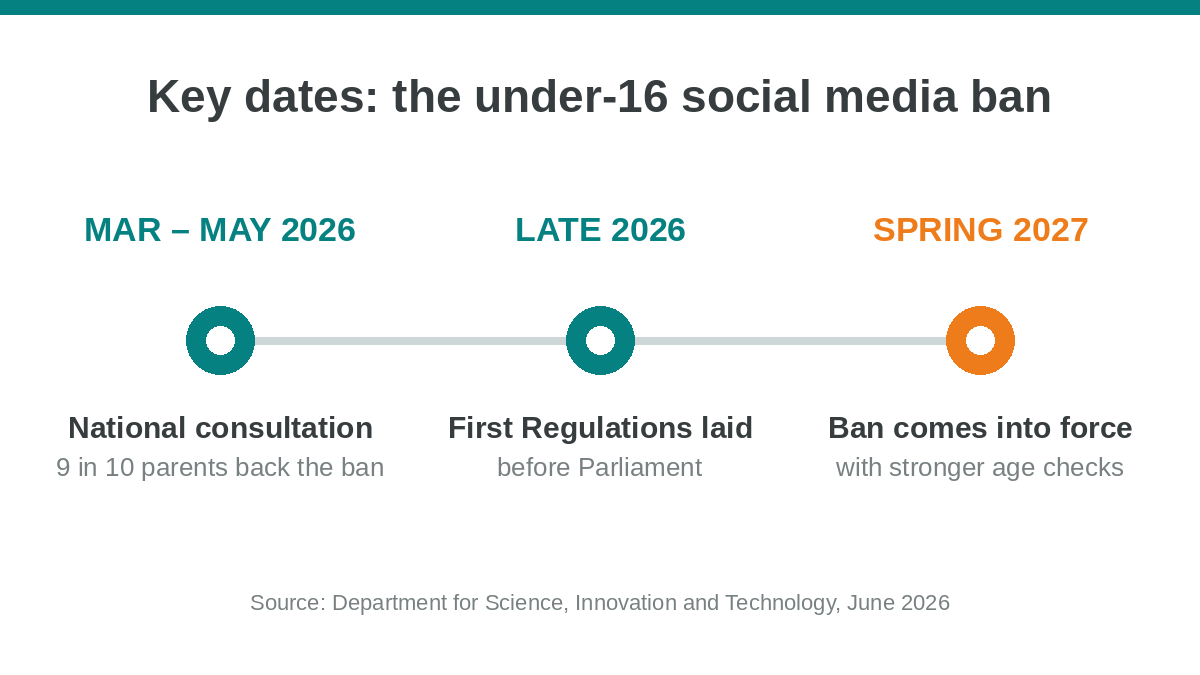
Following a national consultation that ran from March to May 2026, the Department for Science, Innovation and Technology published its plans in June 2026. The key points are:
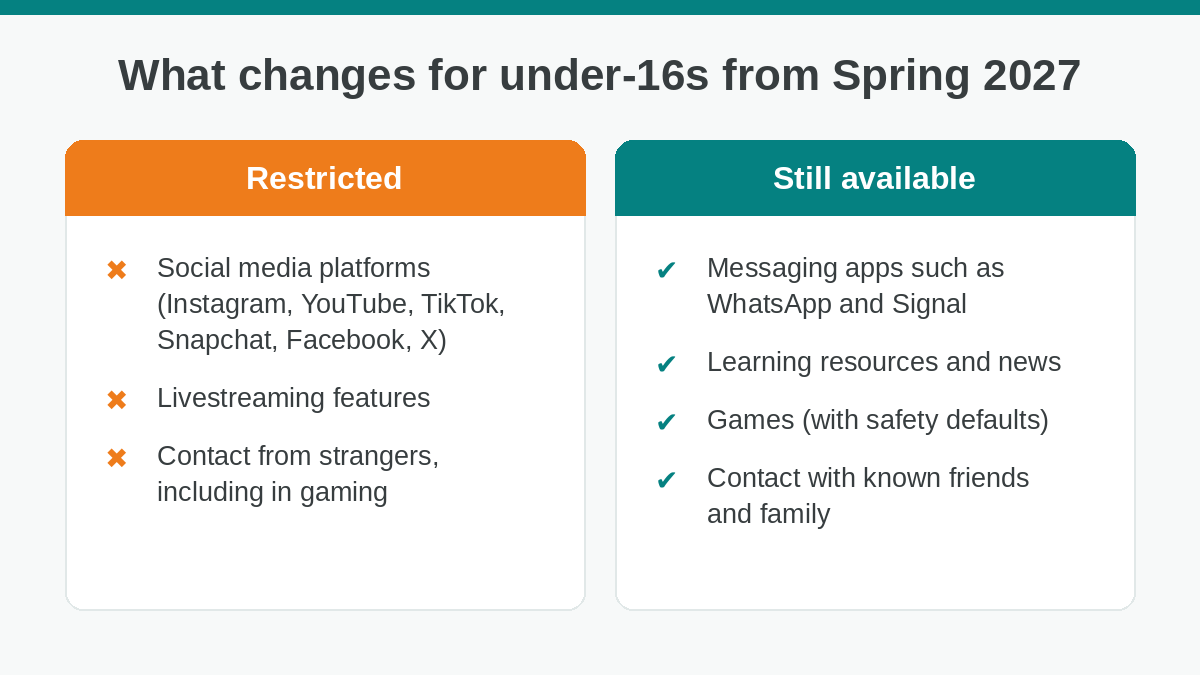
- Social media platforms will be blocked from offering services to under-16s. The Government intends to follow the Australian model, which covered platforms such as Instagram, YouTube, TikTok, Snapchat, Facebook and X.
- Messaging services such as WhatsApp and Signal are not intended to be included, so young people can stay in touch with known friends and family.
- High-risk features, including livestreaming and strangers being able to contact children, will also be restricted for under-16s on other online services, including gaming.
- The rules will be backed by stronger age verification requirements, with Ofcom setting out approved age assurance methods in the coming months.
- The first Regulations will be laid before the end of 2026, with implementation expected in Spring 2027.
The consultation showed 9 in 10 parents backing the ban, and two-thirds of young people agreed that under-16s should not be allowed to use at least some social media platforms.
Why this matters for children’s homes
Children’s homes already carry a clear duty to keep young people safe online. Under the Children’s Homes (England) Regulations 2015 and the Quality Standards, the protection of children standard expects homes to help children stay safe from harm, and Ofsted’s updated inspection framework places increasing weight on the impact of your safeguarding arrangements, not just the paperwork behind them.
When the ban arrives, three things will change in practice:
Young people will look for workarounds. VPNs, borrowed accounts, older friends’ devices and lesser-known platforms will all become more attractive once the mainstream platforms are closed off. Homes will need filtering and monitoring that can detect this activity, not just block a list of websites.
Inspectors will ask about it. Once the rules are in force, expect questions about how your home supports compliance, how device use is managed for each young person, and what your monitoring shows. Homes that can evidence per-child controls and documented oversight will be in a strong position.
Staff will need to manage the transition. For some young people, losing access to platforms they use daily will be genuinely difficult. Homes will need a plan for those conversations, and consistent controls that back staff up rather than leaving them to police devices manually.
What should registered managers do now?
There is no need to panic, and families and providers are not required to do anything yet. But the homes that will find Spring 2027 easy are the ones that prepare during 2026. We recommend:
- Audit your current setup. Know exactly what devices are in the home, how each young person connects, and what controls apply to each device and profile.
- Check your filtering can see around corners. VPN detection, new-platform categorisation and per-profile reporting will matter far more once under-16s are actively trying to route around restrictions.
- Review your online safety policy. Build the upcoming changes into your policy review cycle now, so the update is documented well before inspectors start asking.
- Plan the conversation with young people. The change will land better as a planned, supported transition than as a surprise. Involve your team and, where appropriate, the young people themselves.
How QLine IT can help
QLine IT is a listed filtering and monitoring integrator with the UK Safer Internet Centre, and our solution is self-certified against the UKSIC Appropriate Filtering and Monitoring criteria. For children’s homes, we provide secure WiFi with a profile for each young person, internet filtering with per-device control, and monitoring that gives managers the documented evidence Ofsted expects.
As the new rules take shape, we will be keeping our children’s homes clients ahead of every change, from age verification requirements to the detection of VPNs and emerging platforms.
To talk through what the under-16 social media ban means for your home, get in touch with the QLine IT team.
QLine IT, your partner in children’s home online safety.