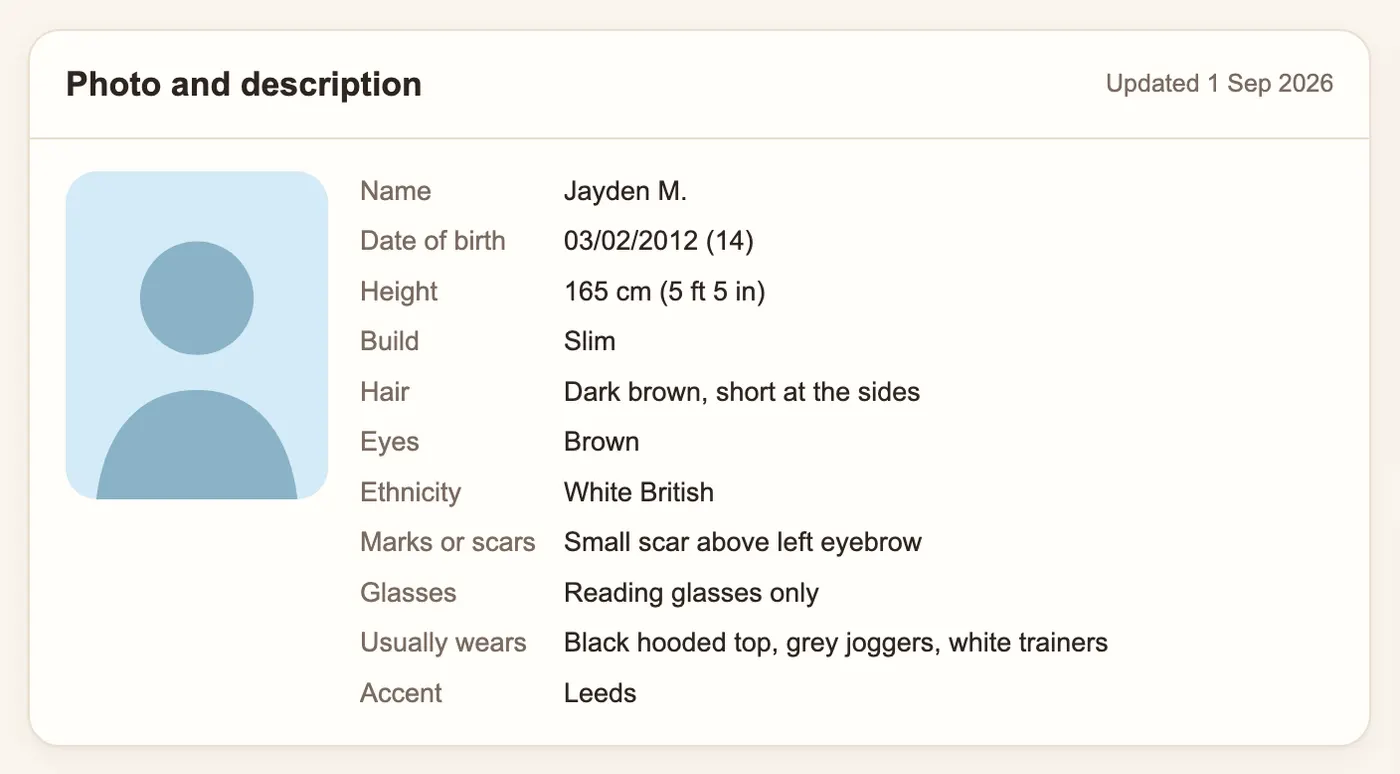
Photo and description
Height, build, hair, eyes, marks, glasses and what they usually wear, with the date it was last updated.
Precinct Care
A missing person profile ready in advance for every young person, in the format police forces use for children in care, so nobody is searching for a photo at 2am.
When a young person goes missing, the first hour matters. Police need a recent photo, a description, the places they may go and who they may be with. Most homes keep this on paper, out of date.
Precinct Care builds the profile from the young person's file and keeps it ready, in the Philomena Protocol format. For adults who may go missing, it uses the Herbert Protocol format instead.
Where we are: Precinct Care is in final development, shaped with registered managers, Responsible Individuals and Reg 44 independent persons. We are booking demonstrations now and taking a small number of pilot homes. The snippets on this page are from the working system, filled with made-up people and records.
The missing person profile, sending it to the police, the step-by-step plan when a young person goes missing, return home interviews and spotting patterns.
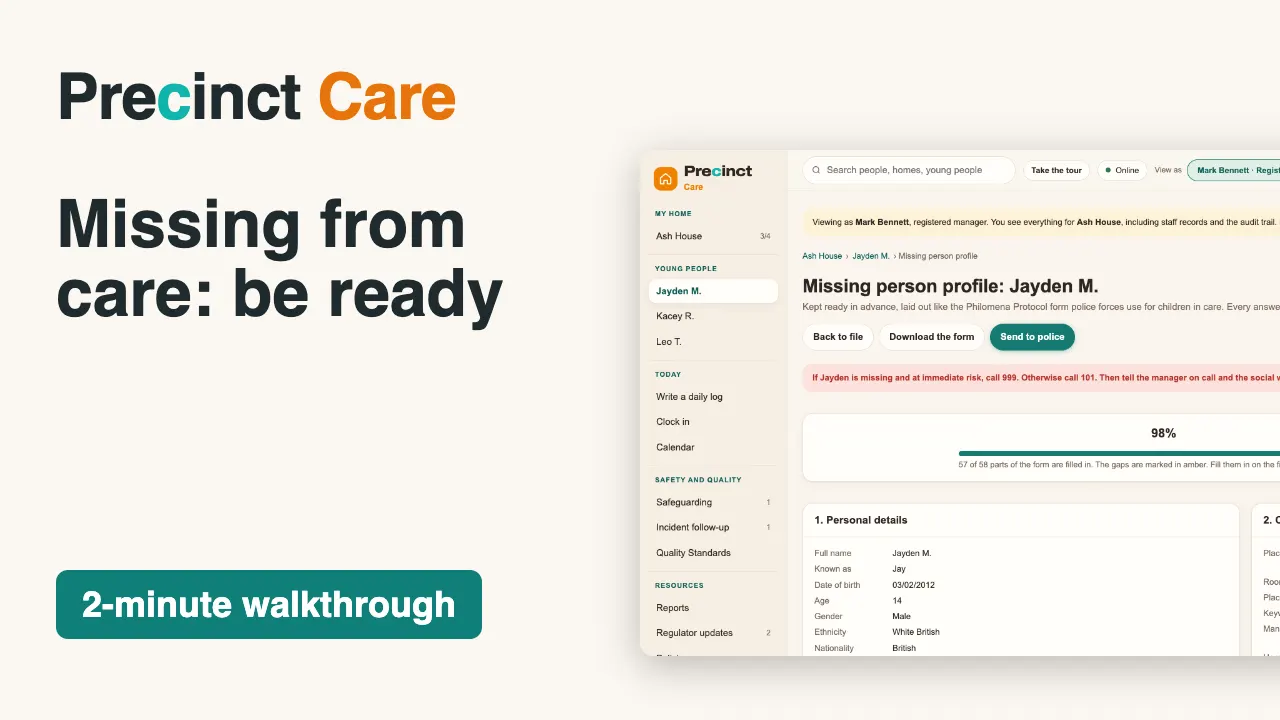
Pressing play loads the video from YouTube. Everything shown is demo data: the homes, staff and young people are made up.
Height, build, hair, eyes, marks, glasses and what they usually wear, with the date it was last updated.
Places they have gone before and places that matter to them.
Friends, family and any adults of concern, from the contacts in their file.
Allergies and medication, so police know if they need anything urgently.
Their number and the apps they use, with usernames held by the manager.
Past missing episodes and the patterns staff have noticed.
A flowchart built from the young person's own missing strategy, with how long to search set by their risk score.
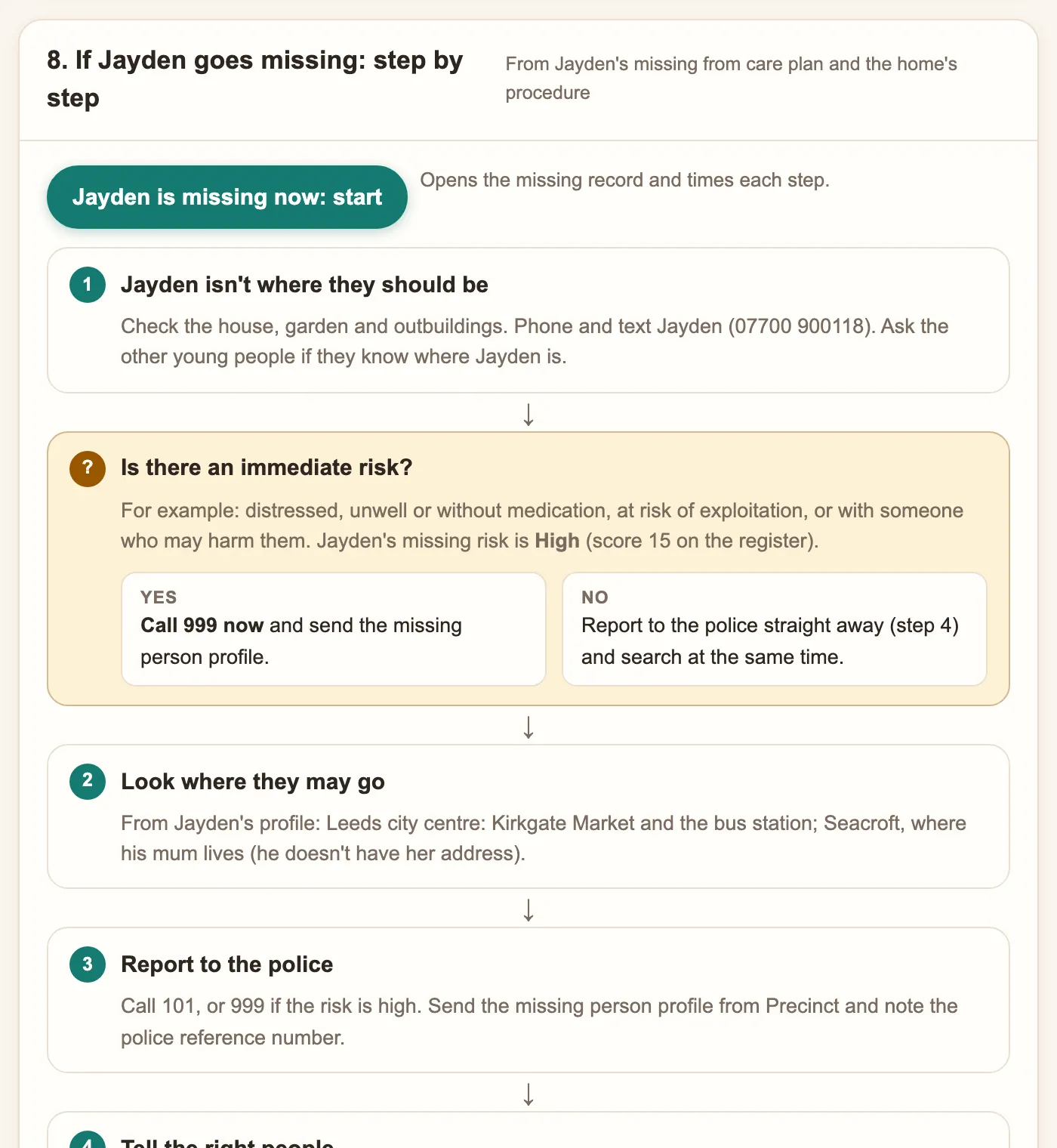
Each young person has a step-by-step plan built from their missing-from-care strategy and the home's procedure. Pressing missing now opens the missing record and times each step: check the house and phone them, decide whether there is an immediate risk, look where they may go, report to the police with the profile, and tell the right people.
How long to search before calling the police comes from their risk on the risk register: report straight away for a high risk, search for up to 30 minutes for a medium risk, and up to an hour for a low risk, or sooner if you're worried.
From the young person's file, staff open the profile and press Send to police. It goes securely, and the file records that it was sent and by whom. The profile says what to do first: if they are at immediate risk, call 999; otherwise call 101 and tell the manager on call, the social worker and the out-of-hours team.
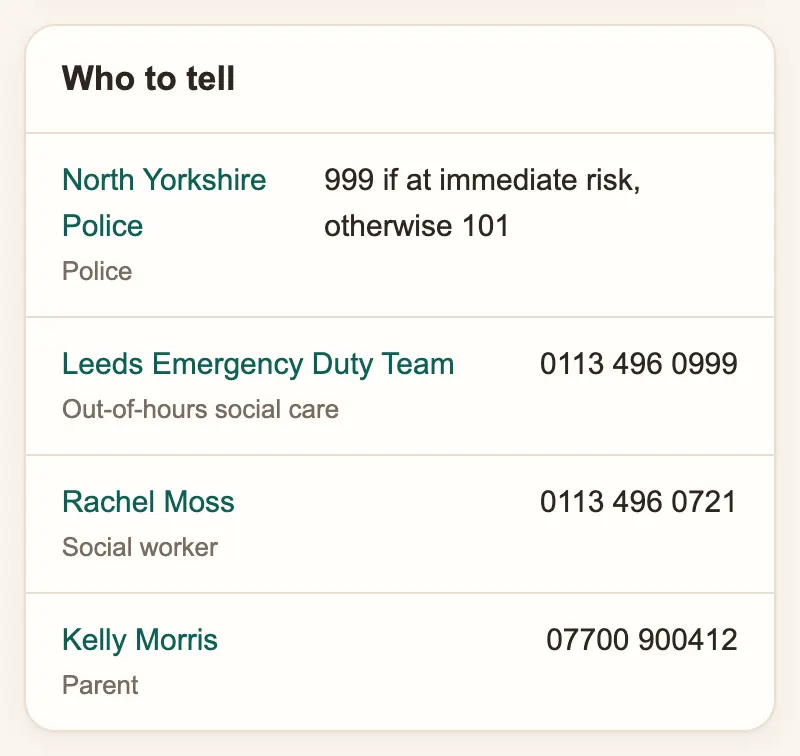
The police, the out-of-hours team, the social worker and family are listed on each young person's profile with the right number, so the person on shift at 2am doesn't have to look anything up.
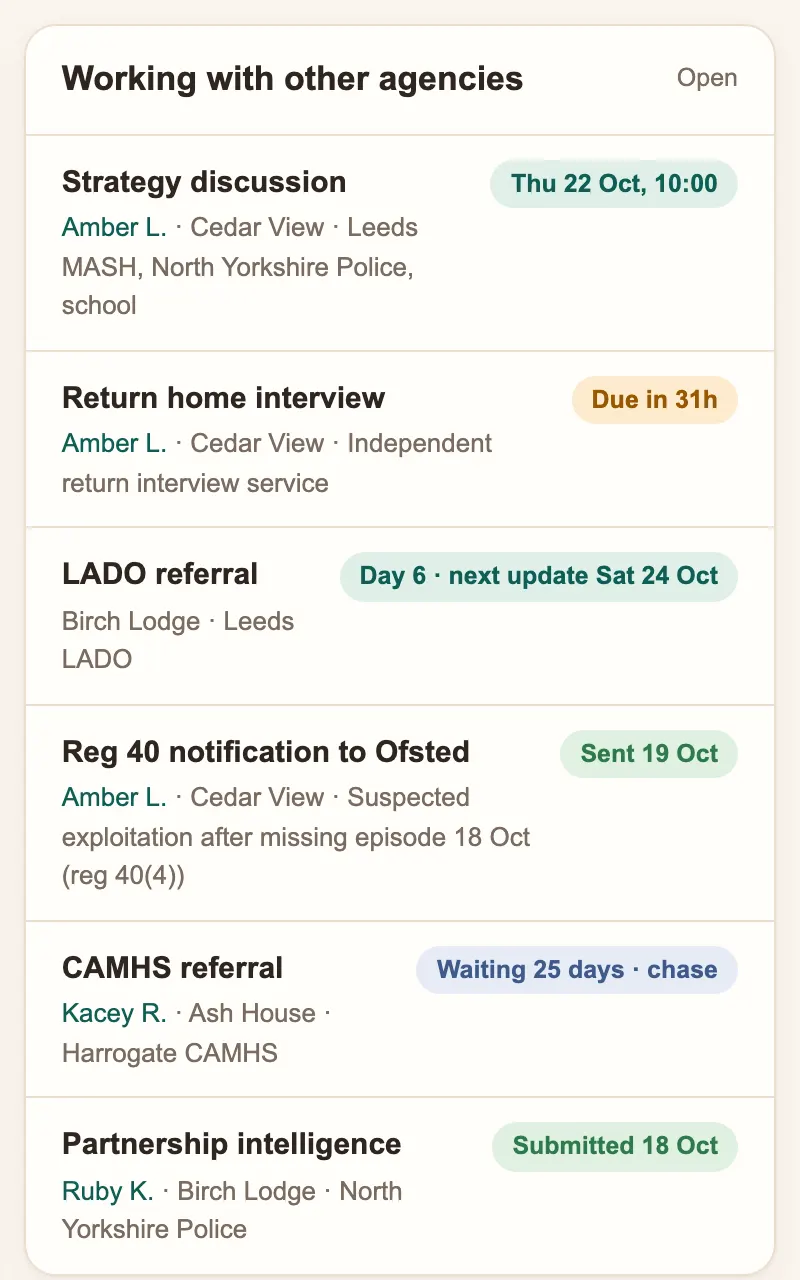
The missing episode is recorded with times and how they came back. The return home interview is set as a follow-up within 72 hours and tracked until it is done, and the missing risk is flagged for an early review. Managers can see which day of the week episodes happen, and Precinct Care points out patterns, such as episodes that all happen at weekends. Missing episodes are included in the Reg 44 visit pack, Ofsted Annex A and the Ofsted inspection pack. Download our free missing from care profile and return from missing checklist (Word and PDF).
QLine IT also provides managed phones for young people, which can help locate a missing young person's phone under an agreed plan.
The Philomena Protocol is a scheme used by many police forces in England for children in care who may go missing. Care providers keep key information ready in advance in a standard format, so it can be handed to police straight away.
The profile is filled from the young person's file, so when staff update the description, contacts or photos, the profile changes too. If anything is missing, the file says so.
Book a 30-minute demonstration. We'll show you the screens your staff, managers and inspectors would use.
Precinct Care
Raise a safeguarding concern from any shift, let the DSL triage it within one working day, follow a clear escalation flowchart and spot patt
A live risk register for every young person and home: likelihood times impact scores, a risk map, owners, review reminders and high risks fl
Record incidents, restraint (physical intervention) and missing episodes in a children's home once. Precinct Care fills every record that ne