Speak up in two minutes
About a child's safety, a member of staff, a manager or the DSL, or how the home is run.
Precinct Care
Staff who feel safe to speak up, and looked after themselves, look after children better. Precinct Care gives every member of staff a safe route to raise a concern and a private place to talk after a hard shift.
Children's homes depend on staff who notice things and say so. Speak up lets anyone raise a concern about a child, a colleague, a manager or how the home is run in about two minutes. It goes round the person involved, and the person who raised it can see when it's read and answered.
Where we are: Precinct Care is in final development, shaped with registered managers, Responsible Individuals and Reg 44 independent persons. We are booking demonstrations now and taking a small number of pilot homes. The snippets on this page are from the working system, filled with made-up people and records.
About a child's safety, a member of staff, a manager or the DSL, or how the home is run.
A concern about the manager or DSL goes to the Responsible Individual, and the person involved never sees it.
What to do and in what order, with the LADO told within one working day for allegations against staff.
The LADO, the NSPCC Whistleblowing Advice Line, Ofsted's whistleblowing line and Protect, always shown.
A private conversation after a hard shift. Nothing written there goes to the manager or the home.
Ideas for the home and items for the team meeting, with what changed because of them.
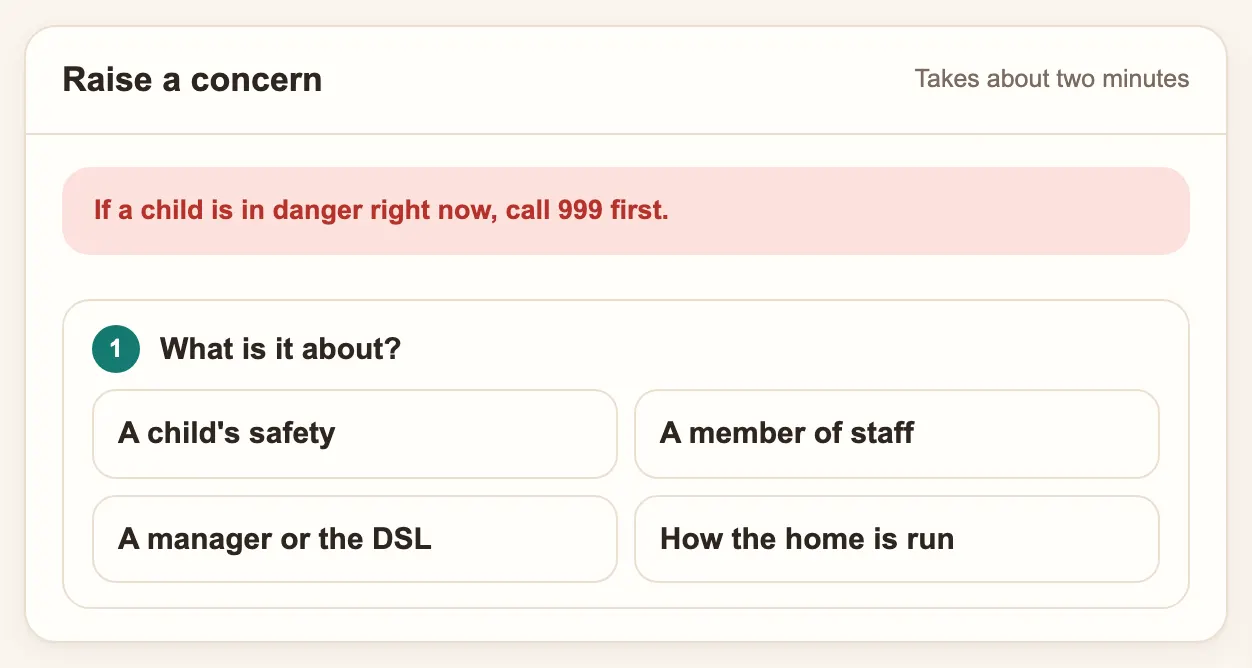
Staff choose what the concern is about and write what they saw or heard. They don't need proof. If a child is in danger right now, Precinct Care tells them to call 999 first.
A step-by-step guide shows what happens next: don't investigate or tell the person, the DSL or Responsible Individual tells the LADO within one working day, and Ofsted is notified where the regulations require it.
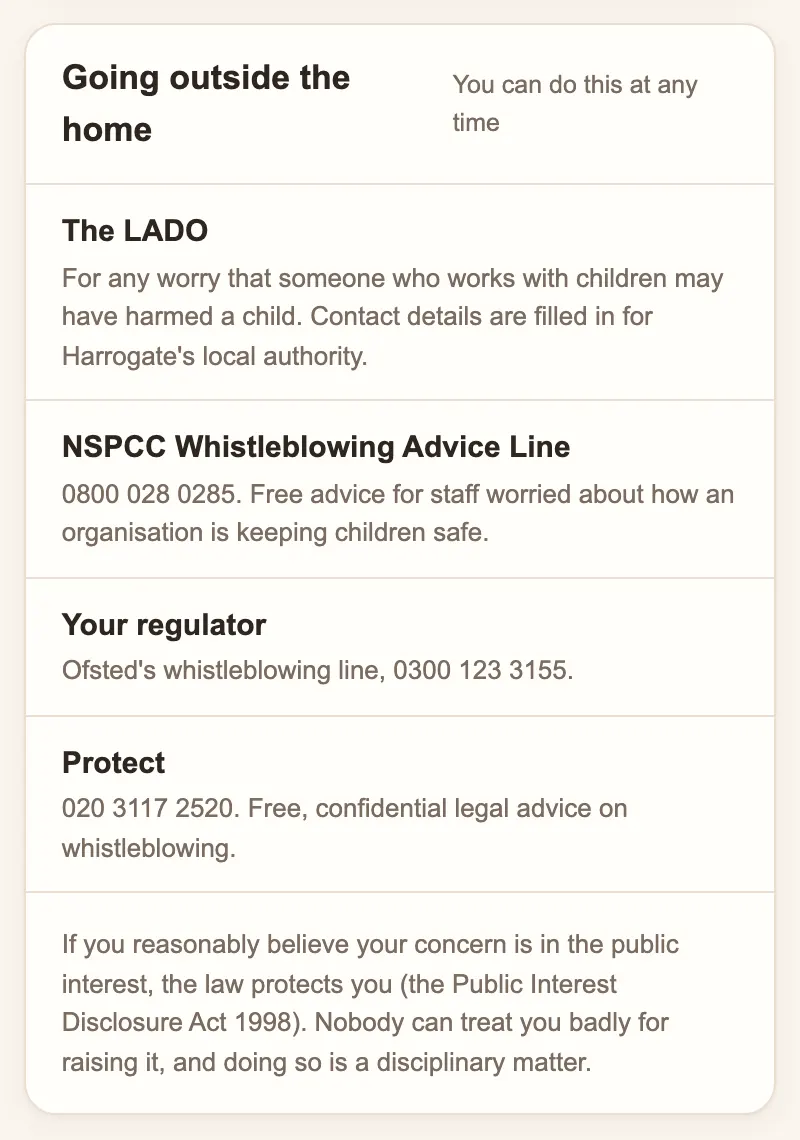
The LADO, the NSPCC Whistleblowing Advice Line, the regulator's whistleblowing line and Protect are always listed, with numbers. Precinct Care explains, in plain words, that raising a concern is protected by law if you reasonably believe it is in the public interest (Public Interest Disclosure Act 1998).
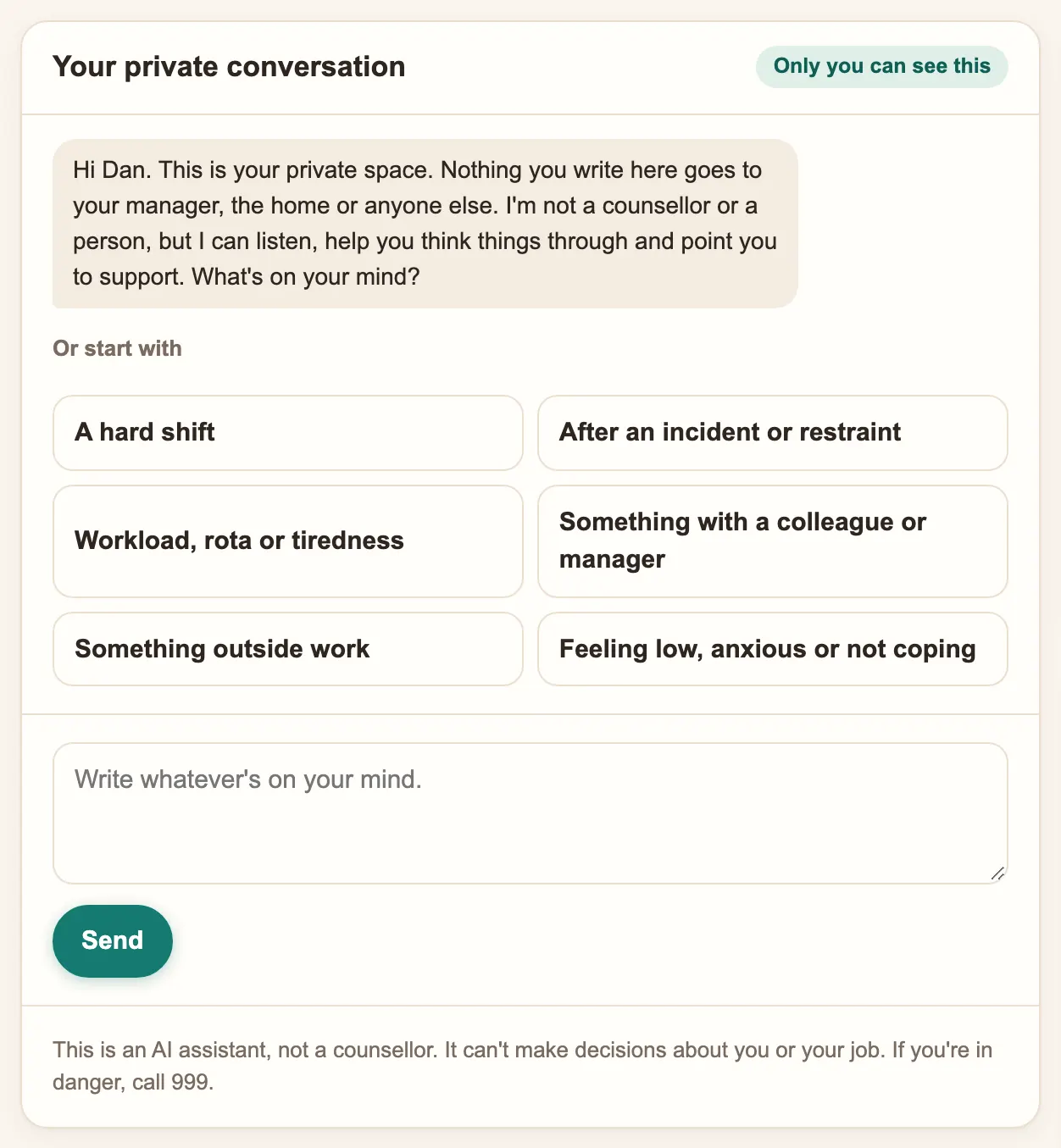
Each member of staff has a private conversation they can use after a restraint, a difficult shift or at any time. It listens, helps them think things through and points them to support. Nothing they write goes to their manager, the home or anyone else. It is clear that it is an AI assistant, not a counsellor, and that it can't make decisions about anyone's job.
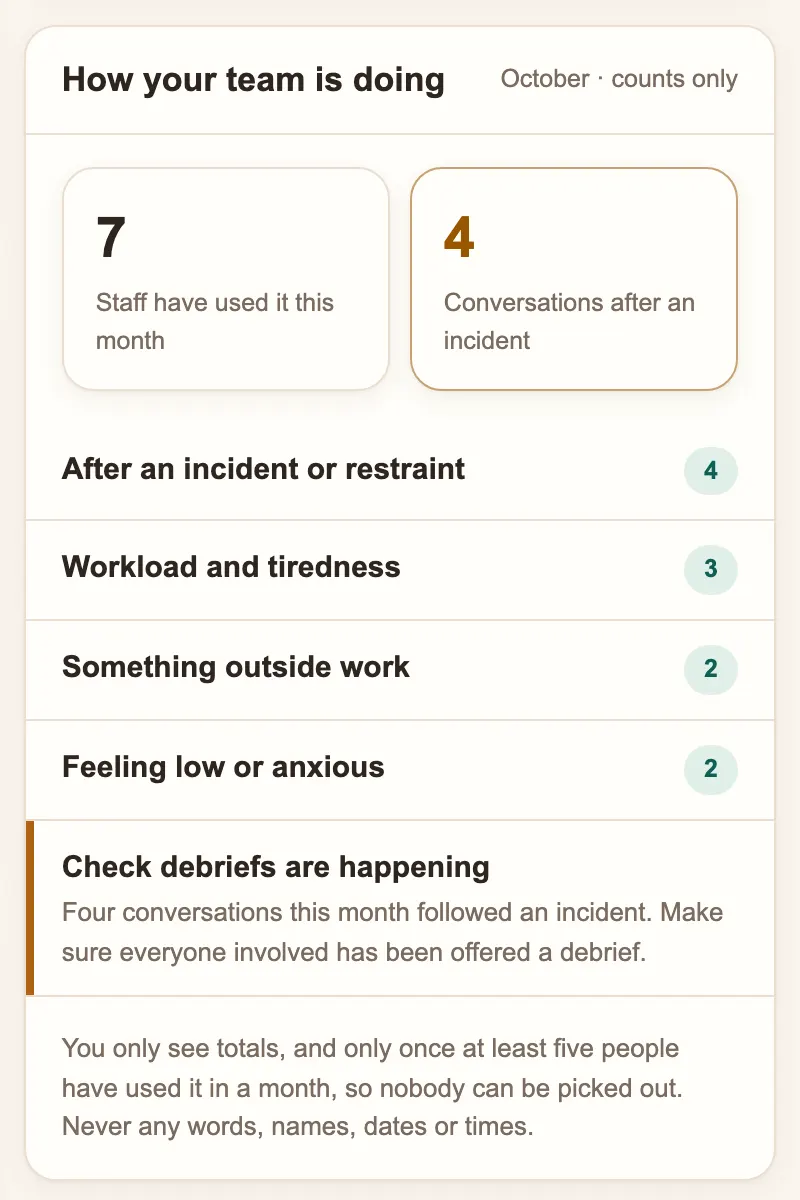
Managers see only totals: how many staff used it this month and the kinds of things on their minds, such as conversations after an incident. Totals only show once at least five people have used it in a month, so nobody can be picked out. Never any words, names, dates or times.
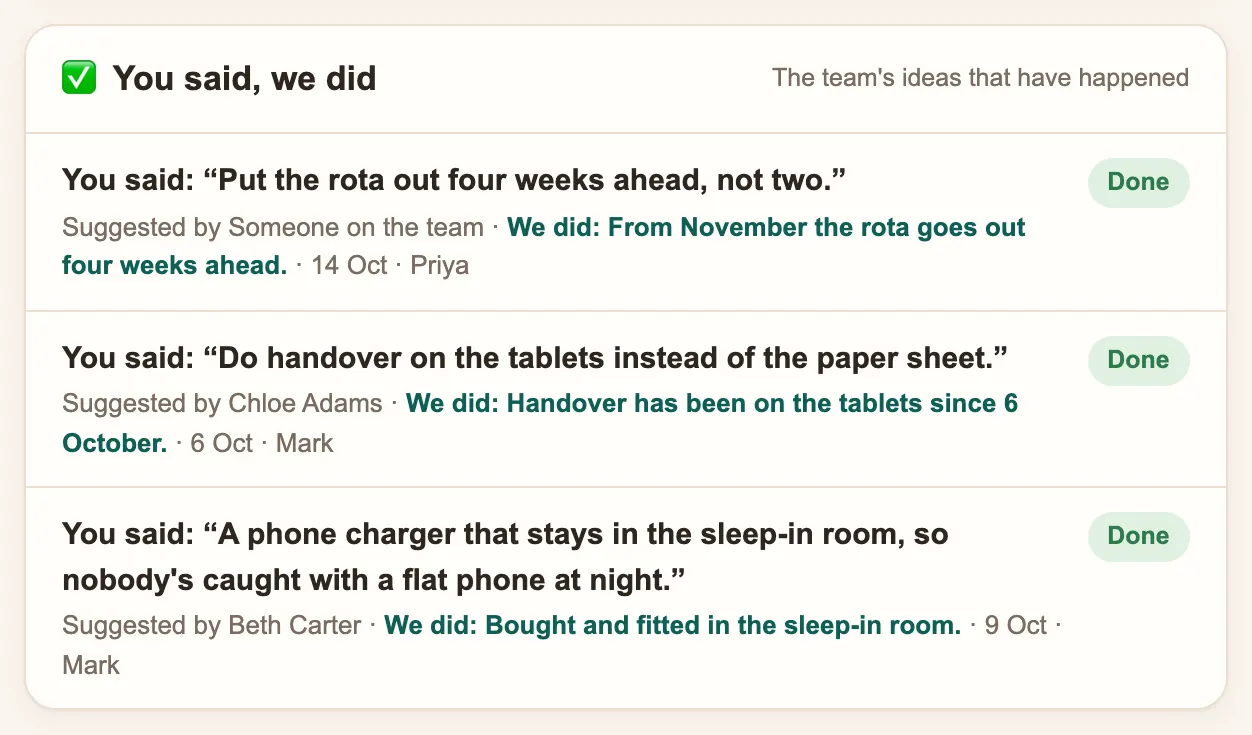
Ideas for the home and items for the team meeting go to the manager and the team, with an option to leave your name off. What changed is listed, so staff can see their ideas being acted on.
Book a 30-minute demonstration. We'll show you the screens your staff, managers and inspectors would use.
Precinct Care
A live training matrix for care homes and children's homes. When a course is missing or due within 30 days, Precinct Care assigns the online
Raise a safeguarding concern from any shift, let the DSL triage it within one working day, follow a clear escalation flowchart and spot patt
Policy and procedure templates for children's homes in England, Wales and Scotland, adopted and adapted in Precinct Care, read and signed by